
Tree Removal
Full felling or top-down sectional dismantling of unwanted, dead or hazardous trees, including trees close to powerlines and buildings across Launceston.
Tree Removal in Launceston
Fully insured arborists taking down trees across Launceston, hazardous trees near buildings, windthrown gums after a valley storm, oaks and elms that have run out of room on old suburban blocks. Cold winters and saturated ground make the work here different from most parts of the country. Same day quotes, free to enquire, no pressure.
Full felling or top-down sectional dismantling of unwanted, dead or hazardous trees, including trees close to powerlines and buildings across Launceston.
Tree Removal in Launceston
Round-the-clock attendance for storm damage, fallen limbs and unstable trees. Wet winters and valley wind events bring plenty of urgent callouts to Launceston.
Emergency Tree Services in Launceston
Stump removal below ground level so you can turf, pave or replant. Narrow machines available for the tight yard access common across older Launceston streets.
Stump Grinding in Launceston
Crown lifting, canopy thinning, deadwooding and formative shaping by qualified arborists who work to the branch collar, not wherever the saw happens to reach.
Tree Pruning in Launceston
Block preparation and vegetation removal on residential and rural lots around Launceston. Worked to permit lines, council overlays and building footprints.
Land Clearing in Launceston
On-site processing of green waste and bulk garden mulch deliveries across Launceston. Fresh hardwood chip or aged material available by the cubic metre.
Mulching & Wood Chipping in Launceston
Written tree assessments for council applications, insurance matters and boundary disputes, coordinated with a consulting arborist when a formal document is needed.
Arborist Reports in LauncestonCall or fill in the online form. Describe the tree, the access path and anything nearby, a building, a fence, powerlines or a drop to the lower part of the block.
We walk the block and look at the tree itself, the drop zone, how the load can be moved and any ground conditions that matter, especially after wet weather.
You get a written price that breaks out the felling method, equipment, green waste disposal and any stump work as separate items, nothing bundled into a single figure.
Climber, EWP or a combination depending on the tree. Every piece of wood comes down under control, roped, lowered and placed, not dropped.
Branches through the chipper, trunk cut into rounds, lawn raked and driveway blown before the truck leaves. Stump can be ground the same day if you want it gone.
If a tree or branch is touching powerlines, stay clear and call TasNetworks on 13 20 04 or 000 for emergency services.
Cut power at the main switch
If the fallen tree or any broken branch is near the service line or touching the building, turn off power at the main switchboard before going outside.
Take photos before touching anything
Wide-angle and close-up photos from every angle while the scene is undisturbed. Your insurer needs this as evidence, once anything moves, you've lost it.
Keep clear of all wires
Every line should be treated as live until the distributor says otherwise. Call TasNetworks on 13 20 04, we won't work near energised wires under any circumstances.
Call us to make the site safe
We can be on site across Launceston the same day. The first job is always to stop further damage, full removal can follow once the tree and the site are stable.

The steep terrain around Cataract Gorge and the Tamar riverbank puts real limits on access and drop zones. Every job on these sections needs a specific rigging plan before a chainsaw goes near the tree.

Cold fronts funnel up the Tamar and saturate ground until root plates give way. Whole trees uproot and large limbs fail without warning during and after these events.

Much of Launceston's older housing stock has tight driveways, single-brick side paths and small rear yards. We match the machine to the space and plan the access before we quote.
Why locals choose us
Qualified arborists with public liability insurance and a locally based crew. Quotes are written and itemised. Sites are left clean.
Public liability insured
Qualified, locally based arborists
Same day quotes
Locally owned and operated, serving Launceston and surrounds
Every job planned around protecting the tree, the property and everyone on site.
EWP, chippers, climbing rigs and rigging hardware on every truck
A snapshot of the common jobs we quote on across Launceston. Every yard is a bit different, but most fall into one of these shapes.
 TYPICAL BEFORE
 TYPICAL AFTER
 TYPICAL BEFORE
 TYPICAL AFTER
 TYPICAL BEFORE
 TYPICAL AFTER
 TYPICAL BEFORE
 TYPICAL AFTER
 TYPICAL BEFORE
 TYPICAL AFTER
 TYPICAL BEFORE
 TYPICAL AFTER
Real price bands from the jobs we quote each week. Every site is different, but most jobs land inside one of these four bands.
Under 6m, clear yard, no rope work needed
What's in scope: Climb or pole saw, controlled drop, chip on site, rake and blow
6 – 12m, typical suburban yard, standard side access
What's in scope: Climber with rope work, managed lowering of each section, chipper, full tidy-up
Over 12m, near buildings, powerlines or steep ground
What's in scope: EWP or crane, full rigging plan, distributor coordination where lines are involved, complete tidy-up
Nights, weekends, storm event callouts
What's in scope: Applied on top of the standard job rate. We make the tree safe first and return for full removal if needed.
The cheap quote and the expensive quote are usually the same job done two different ways. Here's how to tell which one you're getting, and what a real quote should look like before you say yes.

Current public liability certificate
Ask to see the Certificate of Currency before work starts. Anything under $10M cover is thin for tree work near occupied buildings.
Itemised written price
A proper quote lists each task separately, felling method, rope work, chipping, stump removal, haulage, GST. One lump number means the price can move once the job starts.
On-site assessment, not a phone guess
Nobody can price a tree without seeing the access and the drop zone. For anything bigger than a small ornamental, insist the arborist visits first.
Qualified arborist actually doing the work
AQF Level 3 minimum, with chainsaw and EWP tickets. Ask who climbs on the day, not just who does the quoting and disappears.
Proper cuts on pruning work
If pruning is part of the job, it should follow AS 4373-2007. Topping and lion-tailing break that standard and weaken the tree structurally.
No large cash deposits upfront
Legitimate operators invoice on completion or take a small deposit at most. Demanding cash before the job is the most common pattern in tree-removal scams.
Named vehicle and proper equipment
An unmarked ute with a chainsaw in the back is almost always uninsured. Real operators turn up with a chipper, a log tipper and their business name on the side of the truck.
Recent references in your area
Ask for two completed jobs nearby. A crew that works Launceston regularly will name streets and send photos without being pushed.
Short answer: storm damage usually yes, removing a healthy tree usually no. Here's the line most Launceston policies draw, always confirm with your specific insurer.
A storm-felled tree that hits your house, fence or car
Most home and contents policies pay for removing a tree that has hit an insured structure during a storm.
Making the site safe after a fall
Bracing or removing a partially fallen tree to stop further damage is usually covered under the same claim.
Debris removal attached to the damage
When the claim is for damage to the building, removal of the debris that caused it is generally part of the payout.
After-hours attendance with insurer approval
Emergency make-safe outside business hours is usually reimbursed if you call the insurer first and get the work approved before it starts.
A healthy tree you simply want removed
If no insured structure has been damaged, the cost of removal falls entirely to you, regardless of how worried you are about it.
Maintenance pruning and canopy work
Trimming back branches, lifting the crown or clearing gutters are owner-funded maintenance, not insurance work.
Stump removal after a voluntary removal
If you chose to take the tree down rather than having it fall, the stump is yours to deal with at your expense.
Trees on a neighbour's property
Your insurer will not fund removal of a tree that stands on someone else's land, even if its canopy hangs over your boundary.
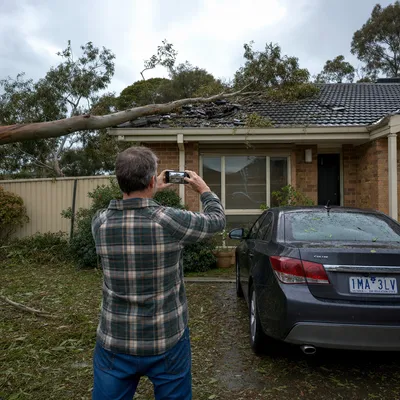
Smooth claims come down to documentation. Send your insurer all of this on day one:
We provide the written job report and Certificate of Currency at no extra cost, just ask when booking.
Most small backyard trees on residential blocks don't need a permit. Large, native or heritage trees usually do. Run through these three questions before booking the work.
Trees above these thresholds commonly require a permit under City of Launceston planning controls.
Listed trees almost always need formal approval before any work, sometimes regardless of size.
Overlay zones override normal thresholds. Look at the planning certificate on your title to check.
Any answer "yes"? A permit application is the safest path. Removing a protected tree without one carries fines starting around $5,000 and going much higher for heritage trees.
City of Launceston permit formThree things you choose at quote time, what we do with the chips, whether the stump goes, and what you want left as firewood.

All branches and prunings get chipped on site. Tell us whether to leave the pile, spread it across garden beds or haul it away, we'll include that in the quote.

Stump removal is a separate line item. Once the stump is gone the area can be returfed, paved or replanted without any obstruction from the old root mass.

Good hardwood (blackwood, oak, ash) can be bucked into rounds and stacked near the fence. Worth keeping if you have a wood heater running through a Launceston winter.
Once the stump is machined out, fill the void with topsoil and pack it down rather than leaving the wood chip mix in place, the chip settles and drops as it rots, leaving a sunken hollow. For a turf finish, roll out turf over screened topsoil and water daily for the first week to ten days. For a garden bed, work compost into the area and give it a full growing season before putting in anything you care about. Decomposing wood material ties up available nitrogen while it breaks down.
The fence line is where most tree disputes start. The rule in Tasmania is simple, but only if you know where the trunk actually sits at ground level.

Quick test: stand at the trunk and look at where it meets the ground. The owner of the land the trunk sits on owns the tree, even if half the canopy is over the fence.
Rule: When the base of the trunk sits fully on your land at ground level, the tree belongs to you, including when branches extend over the fence to the neighbour's side. Removal costs and any permit are yours.
What we do: We quote and handle it the same as any other backyard job. If the cleanest access is through a neighbouring yard, we ask the neighbour first.
Rule: A trunk that straddles the fence belongs to both owners. Neither side can act unilaterally, you need a written agreement from both parties before anything happens.
What we do: We will not commence a boundary tree job without both owners signing off on the scope and cost division in writing. It protects everyone and keeps the job clean.
Rule: You can cut branches that cross into your airspace from a neighbour's tree, but the cutting is at your cost and the cut material belongs to the tree's owner by law.
What we do: We prune to the boundary line and finish the cuts properly. We will also have a direct conversation with the neighbour where that helps avoid a long-running dispute.
Stuck mid dispute? Call us first, we'll quote both sides without taking a position. Most neighbour issues are solved by getting an honest written quote in front of both parties.
Talk to us about a boundary treeDon't see your suburb? Get in touch. We likely still cover it.
A small straightforward tree can cost a few hundred dollars. A large hazardous removal with rigging and tight access can cost several thousand. Here is what we actually weigh up.
Height, trunk girth and canopy width set the baseline for how long the job will take and what gear is needed.
Steep terrain, a locked gate, a narrow side path or no clear drop zone all push time and cost upward.
A building, fence or powerlines nearby means slower, more controlled work. Every piece has to be managed rather than dropped.
Whether you want the stump gone and how deep it needs to go affects both machine time and labour on the day.
Chipping on site, bagging logs and hauling material away from the yard all add to the quote depending on what you want done with it.
Night, weekend or storm-event callouts attract a higher rate than booked daytime work through the week.
Need tree removal in Launceston? We're a locally based team of qualified arborists handling everything from a single hazardous gum near the house to large acreage land clearing. Sectional dismantling, crown reduction, deadwooding and stump grinding, planned around the property. Fully insured, same day quotes.
We handle emergency storm damage callouts, tree pruning, stump grinding, land clearing and on site chipping with mulch supply across Launceston.
If your job needs a formal arborist report for insurance or a dispute, call us and we'll point you to a qualified consulting arborist.
A small backyard tree with clear access runs around $300 to $600. A medium gum or deciduous tree on a typical suburban block lands between $800 and $1,800. Anything large, leaning toward a structure or near powerlines starts at $2,000 and scales from there based on rigging and equipment needs. Ring or send an enquiry for a same-day indicative price.
Yes. Our crew are qualified arborists who carry public liability cover. We can provide a current Certificate of Currency before any work starts.
For standard booked work we aim to have a quote back the same day and schedule within the week. For storm damage, hazardous trees and genuine emergencies, we attend across Launceston around the clock.
Yes. Trees near buildings and powerlines are taken down section by section with each piece managed on rope, nothing free-falls. We plan the method and the drop zone before starting.
We attend storm damage and urgent jobs across Launceston 24 hours a day. The Tamar Valley brings cold fronts and wind events that knock trees over regularly, we know how often these calls come through and we staff for it.
Stump work is listed as its own line item. You choose whether to include it. We grind to below ground level so the area is clean to pave, turf or replant once the machine has finished.
A small tree in an accessible yard is typically half a day. A medium tree needing rope work runs a full day. Large trees, multiple trees on one property or difficult terrain can stretch across two days. The written price tells you the expected duration upfront.
Small material goes through the chipper. You keep the chips as mulch, or we load and haul them away, your choice. Larger timber, particularly good hardwood like blackwood, oak or ash, can be cut into rounds and left stacked for a wood heater.
We check every tree before starting. If there are active nests or hollows with wildlife, we stop and either reschedule or adjust the work plan around the animal.
Yes. These species make up a big part of the work in older Launceston suburbs. Large elms and oaks are heavy-limbed and dense, so the rigging plan has to account for the load. We're familiar with what they do and how they fail.
Yes. We can quote the job and walk both owners through the options. We won't cut anything until both sides have agreed in writing on the scope and who pays what.
If a tree fell during a storm and damaged an insured structure (the building, a fence, a parked car) most policies cover the make-safe and removal tied to that damage. A healthy tree you want removed, or routine canopy work, is almost never covered. Contact your insurer before authorising any work and ask us for a written job report and Certificate of Currency for the file.
Get a Certificate of Currency, an on-site assessment and a written price that breaks each item out separately. Avoid anyone who asks for significant cash upfront. Look for a truck with a business name on it and proper equipment, a chipper and a tipper on site, not just a chainsaw in the back of a ute.
Separate line items for site setup, the felling method (climber or EWP), rope work and managed lowering, on-site chipping, optional stump grinding, haulage if you want material removed, and GST listed as its own figure. A single dollar amount with no breakdown is a sign the final bill can move.
If the tree was on your land, you arrange removal. Your home insurer generally covers it if the tree hit an insured structure, call them before anything is touched and provide photographs. If the tree came from a neighbouring property, you may recover costs via your insurer or through the neighbour's if negligence on their part can be established.
Commonly yes, for trees above 0.4m trunk diameter at 1m height, trees on a council register, protected species, or properties with a heritage or vegetation overlay on the title. Dead or dying trees, fruit trees and trees under 3m are typically exempt. Confirm with the City of Launceston before the job, removal without a permit where one is needed can attract fines up to $5,000.
The cutting is a small part of the work. Most of the cost is in managing what happens to each piece once it's cut, particularly on Launceston's steeper blocks or where a house, fence or wires are underneath. Every section has to be roped and lowered one at a time. That's hours of technical work with specialised gear, not just a saw and a trailer.
Fill the void with topsoil and pack it down, the wood chip mix that comes off the grinder will settle and drop as it decomposes over time. For turf, lay it over screened topsoil and water daily for a week. For a garden bed, add compost and let the area rest through one season before planting anything permanent.
Call now or fill in the enquiry form for a local tree removal quote.